
ITALIANO
Razza: Consacrato
“La morte non è una fine, ma un giuramento. Il corpo obbedisce, ma lo spirito ascolta.”
Descrizione
I Consacrati sono individui riportati alla vita attraverso rituali voodoo, spesso eseguiti da bokor (stregoni) che utilizzano pozioni e incantesimi per rianimare i morti. A differenza degli zombi comuni, i Consacrati mantengono una parte della loro coscienza e volontà, sebbene siano legati da vincoli spirituali al loro creatore. Questi esseri esistono in uno stato liminale tra la vita e la morte, servendo come emissari, guardiani o strumenti di vendetta.
Tratti Razziali dei Consacrati
Incremento dei Punteggi di Caratteristica. Il tuo punteggio di Costituzione aumenta di 2 e quello di Saggezza di 1.
Età. I Consacrati non invecchiano nel senso tradizionale. Possono esistere indefinitamente, finché la loro anima rimane legata al corpo.
Allineamento. Tendono verso la Neutralità. La loro volontà è spesso influenzata dal legame con il bokor o dalla missione che li ha riportati in vita.
Taglia. I Consacrati hanno dimensioni simili a quelle che avevano in vita. La loro taglia è Media.
Velocità. La tua velocità base sul terreno è di 30 piedi.
Legame Spirituale. Sei legato spiritualmente al tuo creatore o a una missione specifica. Hai vantaggio su tiri salvezza contro incantesimi o effetti che tentano di controllare la tua mente, a meno che non provengano dal tuo creatore.
Resistenza alla Fatica. Hai vantaggio su tiri salvezza contro l’esaurimento e sei immune agli effetti che ti farebbero dormire magicamente.
Memoria Frammentata. Ricordi frammenti della tua vita passata. Hai competenza in una abilità a tua scelta tra Storia, Religione o Intuizione.
Non-morte Consapevole. Sei considerato una creatura non-morta ai fini degli incantesimi e degli effetti. Non hai bisogno di mangiare, bere o respirare. Tuttavia, puoi beneficiare degli effetti di pozioni e incantesimi di guarigione come se fossi una creatura vivente.
Lingue. Parli, leggi e scrivi il Comune e un’altra lingua a tua scelta (consigliate: Infernale, Abissale o Necronico).
Nomi e Soprannomi
I Consacrati non sempre scelgono il proprio nome. Spesso è il bokor che li ha riportati in vita a nominarli, scegliendo appellativi rituali, numerici o descrittivi: Sette-Notti, Muto, Figlio del Tamburo, Occhio Nero. Alcuni, con il tempo e maggiore autonomia spirituale, si auto-battezzano recuperando nomi della loro vita passata, oppure ne scelgono di nuovi che riflettano la loro nuova funzione o identità: Legame, Spirito Caldo, Cenere Viva, Promessa Rotta. I viventi li soprannominano in modi variabili, spesso temendo la loro origine: Zombi Ritiensi, Maledetti Volontari, Ombre del Patto, o semplicemente Camminanti. Nei villaggi dove la tradizione del Loa è forte, vengono rispettati come Consacrati del Tamburo o Figli dell’Oblio.
Aspetto Fisico
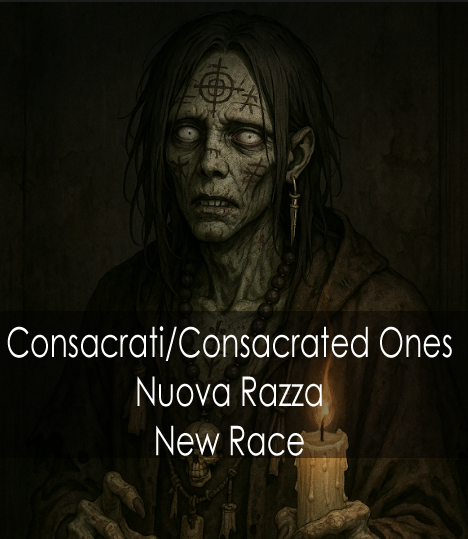
Il corpo di un Consacrato conserva l’impronta della morte, ma non è mai completamente decomposto. La pelle è pallida o grigiastra, a volte coperta di sigilli, simboli disegnati con sangue secco, o inserti rituali come aghi d’osso, ciondoli di conchiglia, o pezzi di tessuto sacro. Le articolazioni sono rigide ma controllate, e il movimento è lento, misurato, come se ogni gesto fosse una decisione del corpo. Gli occhi, se ancora presenti, sono velati o spenti, ma spesso si accendono brevemente quando lo spirito si risveglia per necessità. Alcuni Consacrati indossano vesti cerimoniali, resti della sepoltura o nuove tuniche imposte dal bokor. Il loro aspetto, pur inquietante, emana dignità silenziosa: non sono abomini, ma strumenti rituali viventi.
Personalità
La psiche dei Consacrati è stratificata. In superficie appaiono docili, lenti, obbedienti; ma nelle profondità della loro coscienza sopravvive qualcosa: un’identità frammentata, un’eco di chi erano, e una scintilla di volontà. Questa duplicità li rende riflessivi, attenti, introspettivi. Alcuni abbracciano la loro nuova condizione come rinascita spirituale, altri la vivono con malinconia o ribellione. Sono spesso legati da un senso di dovere, sia verso il loro creatore che verso una missione impressa nel loro animo alla resurrezione. La maggior parte parla poco, e osserva molto. Sviluppano spesso una morale personale fatta di rispetto per i morti, memoria, e silenzio.
Società
I Consacrati non hanno una società strutturata, ma tendono a radunarsi in piccoli gruppi chiamati Cortei della Veglia, guidati da un bokor, una mambo, o da uno spirito guida. All’interno del corteo non esistono ranghi veri e propri, ma ruoli rituali: Guardiano, Portatore di Canti, Memoria, Silenzioso, Mano del Loa. I Consacrati si riconoscono tra loro tramite segni visivi e percettivi, e rispettano profondamente coloro che dimostrano saggezza o conoscenza spirituale. La trasmissione di memorie o sogni condivisi è uno dei pochi modi in cui la cultura si perpetua. Alcuni vivono invece in solitudine, vagando finché non trovano il proprio scopo o un nuovo richiamo alla vita.
Terre Natie
I Consacrati si risvegliano dove i riti sono ancora vivi: nelle isole del Sud, nelle giungle intessute di tamburi e polvere d’ossa, nelle paludi dove l’acqua ricorda i nomi dei morti. Luoghi come il Regno del Fiato Rotto, l’Isola dei Nove Loa, o le Cripte di Tambarou sono famosi per la loro attività necrospirituale. I villaggi che custodiscono tradizioni antiche sanno dove nascono i Consacrati: presso alberi dove fu versato sangue rituale, in tombe d’acqua sacra, o accanto a falò accesi con parole antiche. Nessun Consacrato nasce per caso: tutti sono il risultato di una volontà precisa, di una preghiera che ha attraversato il velo.
Linguaggi
I Consacrati parlano il Comune e spesso apprendono linguaggi legati al culto: Necronico, Infernale, Abissale, ma anche dialetti tribali o idiomi dimenticati. Alcuni non parlano affatto, usando gesti, sguardi e suoni gutturali. I più esperti comunicano attraverso i sogni, lasciando simboli o sensazioni nelle menti altrui. Nei riti collettivi, la comunicazione è spesso cantata, ritmata dai tamburi, o codificata nei movimenti del corpo. Alcuni bokor insegnano ai Consacrati a “parlare col suolo”, scrivendo con le unghie nella terra o sulle ossa.
Cultura e Tradizioni
I Consacrati seguono un ciclo rituale fatto di silenzio, memorie e rinnovamento. Il corpo è sacro, anche se morto: viene curato, adornato, e rinforzato con oggetti di significato. Ogni luna piena è un momento di riflessione, in cui i Consacrati meditano sulle azioni compiute e ricevono visioni del Loa o dei morti. Le danze rituali non sono solo celebrative, ma servono a riconnettere lo spirito col corpo. Importante è la Cerimonia del Ricordo Spezzato, in cui un Consacrato ricorda frammenti della sua vita passata per non perdere se stesso. Alcuni usano tamburi speciali che battono solo per i non-morti, o bevono infusi che rafforzano il legame spirituale.
Religione
La fede dei Consacrati è profonda, e quasi sempre legata ai Loa—spiriti ancestrali del voodoo haitiano. Tra i più venerati ci sono Baron Samedi, signore dei cimiteri; Maman Brigitte, protettrice dei morti sinceri; Papa Ghede, spirito dei crocevia. Alcuni servono spiriti meno conosciuti, legati alle famiglie, ai sogni o ai giuramenti. La religione dei Consacrati non richiede parole, ma atti: silenzio, protezione, ricordo, servizio. Ogni volta che un Consacrato compie il proprio dovere con onore, rafforza il legame con il Loa. I riti vengono eseguiti ovunque si trovi: una semplice pietra, un teschio inciso, o tre candele accese nel buio bastano per onorare lo spirito.
Economia
I Consacrati non possiedono nulla per desiderio. Tuttavia, sanno dare valore a ciò che è simbolico: una ciocca di capelli, una maschera rituale, una moneta appartenuta a un morto. Offrono i propri servigi in cambio di rispetto, protezione, o memorie. In società umane, sono spesso impiegati come guardiani di tombe, trasportatori silenziosi, messaggeri dei morti, o interpreti di sogni. Non accumulano oro, ma raccolgono reliquie, oggetti carichi di storie. Il baratto è il loro metodo preferito di scambio, specialmente se mediato da un sacerdote.
Relazioni con Altre Razze
I Consacrati incutono timore, ma anche rispetto. Gli umani li temono ma li riconoscono come sacri, soprattutto nelle culture che praticano il culto degli antenati. Gli elfi li considerano “legami rotti” e li evitano. I nani li vedono come sacchi vuoti, ma a volte ne usano i servigi. I tiefling e gli aasimar trovano in loro un riflesso dell’interferenza divina. I non-morti li percepiscono come “risvegliati legittimi”, e raramente li attaccano. I lich li ignorano, vedendoli come strumenti altrui. Le creature extraplanari, in particolare i demoni, si guardano bene dal disturbare un Consacrato: non si sa mai chi lo ha mandato.
ECOLOGIA
Sensi
I Consacrati non possiedono sensi acuti come i vivi, ma sviluppano una forma di percezione spirituale: sentono presenze, emozioni residue, e energie rituali. Alcuni vedono nei sogni, altri attraverso i fuochi sacri o le ossa disposte in cerchio.
Dieta
Non hanno bisogno di nutrirsi, ma alcuni rituali richiedono che ingeriscano simbolicamente ingredienti specifici (terra di tomba, acqua consacrata, cera delle candele). Alcuni possono nutrirsi di emozioni forti come la paura o la speranza per rafforzare il proprio legame spirituale.
Sonno
I Consacrati non dormono, ma entrano in uno stato meditativo, simile a una preghiera profonda. Durante questo riposo spirituale, possono ricevere sogni, visioni o ordini dai loro spiriti patroni.
Riproduzione
Non si riproducono. Ogni Consacrato è il risultato di un rituale preciso. Tuttavia, un bokor esperto può “ricreare” un nuovo Consacrato usando parte dell’essenza o delle ossa di uno precedente.
Popolazione
Rari e sorvegliati. In una regione, se ne contano pochi, e sempre associati a una figura rituale o a una missione. Nessun Consacrato esiste senza uno scopo. Si dice che se uno perde il proprio, si dissolva lentamente in sogni.
Amore
Il legame affettivo tra Consacrati è profondo e rituale: si esprime con silenzi condivisi, danze lente attorno al fuoco, o lo scambio di ricordi. Il contatto fisico è raro, ma potente. Alcuni mantengono legami d’amore con chi li ha evocati, con dolore o devozione assoluta.
Morte
Quando un Consacrato muore definitivamente, il suo corpo ritorna alla terra con dolcezza: si frantuma in cenere e ossa pulite. I suoi resti vengono spesso raccolti per creare amuleti, protezioni o per piantarvi fiori notturni. Si dice che il loro spirito vegli su chi ha completato il loro compito.
Voci e Leggende
C’è chi dice che i primi Consacrati furono guerrieri morti che scelsero di restare, protetti dai Loa. Altri credono siano un dono, o una maledizione, lasciata da spiriti dimenticati. In certi templi remoti, si sussurra che i Consacrati non siano affatto morti—ma persone che hanno ceduto il cuore per ascoltare meglio il tamburo degli spiriti.
ENGLISH
Race: Consecrated One
“Death is not an end, but a vow. The body obeys, but the spirit listens.”
Description
Consecrated Ones are individuals brought back to life through voodoo rituals, often performed by bokor (sorcerers) using potions and spells to reanimate the dead. Unlike common zombies, the Consecrated retain part of their consciousness and will, though bound by spiritual ties to their creator. These beings exist in a liminal state between life and death, serving as emissaries, guardians, or instruments of vengeance.
Racial Traits of the Consecrated
Ability Score Increase. Your Constitution score increases by 2, and your Wisdom by 1.
Age. Consecrated Ones do not age in the traditional sense. They can exist indefinitely, as long as their soul remains bound to the body.
Alignment. They tend toward Neutrality. Their will is often influenced by the bond with their bokor or the mission that brought them back.
Size. Your size is Medium and reflects the size you had in life.
Speed. Your base walking speed is 30 feet.
Spiritual Bond. You are spiritually bound to your creator or a specific mission. You have advantage on saving throws against spells or effects that attempt to control your mind, unless they originate from your creator.
Fatigue Resistance. You have advantage on saving throws against exhaustion and are immune to magical sleep effects.
Fragmented Memory. You retain pieces of your past life. You gain proficiency in one of the following skills: History, Religion, or Insight.
Awakened Undeath. You count as an undead creature for the purpose of spells and effects. You do not need to eat, drink, or breathe. However, you can benefit from the effects of healing spells and potions as if you were a living creature.
Languages. You can speak, read, and write Common and one other language of your choice (suggestions: Infernal, Abyssal, or Necronic).
Names and Epithets
Consecrated Ones do not always choose their names. Often, the bokor who revived them assigns them ritual, numeric, or descriptive names: Seven-Nights, Mute, Drum’s Son, Black Eye. Over time, some gain enough spiritual autonomy to rename themselves, reclaiming their former identity or forging a new one like Bond, Warm Spirit, Living Ash, or Broken Promise. The living refer to them with fearful or symbolic nicknames: Riteborn Zombies, Cursed Volunteers, Shadowbound, or simply Walkers. In villages with strong Loa traditions, they are honored as Drum Consecrated or Children of the Veil.
Physical Appearance
A Consecrated’s body bears the mark of death, but is never fully decayed. Their skin is pale or grayish, sometimes inscribed with sigils, symbols in dried blood, or adorned with ritual elements like bone needles, shell charms, or sacred fabric. Joints are stiff but deliberate, and movement is slow and deliberate, as if every action is a conscious decision. Eyes, if present, are veiled or dull, sometimes glowing briefly when the spirit awakens. Some wear burial remnants or new ceremonial robes imposed by the bokor. Despite their eerie presence, they emanate solemn dignity: not abominations, but sacred vessels of purpose.
Personality
The mind of a Consecrated is layered. On the surface, they seem docile, slow, obedient. Yet deep within, fragments of their former identity and a spark of will endure. This duality makes them introspective, watchful, and contemplative. Some embrace their new state as a spiritual rebirth; others experience sorrow or resistance. A strong sense of duty often binds them—toward their creator or an ingrained purpose. Most speak little and observe much. They tend to develop a personal code built on reverence for the dead, remembrance, and silence.
Society
Consecrated Ones do not form a structured society, but often gather in small groups called Waking Processions, led by a bokor, a mambo, or a guiding spirit. Within these circles, there are no ranks, only ritual roles: Guardian, Chantbearer, Memory, Silent One, or Hand of the Loa. They recognize each other through subtle visual or spiritual signs and deeply respect those who demonstrate spiritual wisdom. Shared dreams and visions are among the few means through which their culture persists. Others live alone, wandering until they find a new purpose or a spiritual calling.
Homelands
Consecrated Ones awaken where rituals remain strong: in southern islands, jungles filled with drums and bone-dust, and marshes where water remembers the names of the dead. Locations like the Realm of Broken Breath, the Island of Nine Loa, or the Tambarou Crypts are renowned for necrospiritual activity. Villages that preserve ancient traditions know where Consecrated Ones arise: near trees anointed in blood, sacred water tombs, or bonfires kindled with forgotten words. No Consecrated is born by chance—they are always the result of will, of a prayer that crossed the veil.
Languages
Consecrated Ones speak Common and often learn languages tied to ritual: Necronic, Infernal, Abyssal, or forgotten tribal dialects. Some remain mute, communicating through gestures, glances, or guttural sounds. The most experienced can communicate through dreams, leaving symbols or sensations in the minds of others. During collective rites, speech is often sung, drummed, or danced. Some bokor teach them to “speak with the earth,” scratching messages into soil or bone.
Culture and Traditions
Consecrated culture revolves around silence, remembrance, and renewal. The body is sacred, even in death—maintained, adorned, and reinforced with meaningful objects. Each full moon marks a time for reflection, when Consecrated Ones meditate and receive visions from the Loa or the departed. Ritual dances are not mere celebrations but means of reconnecting spirit and body. A key rite is the Broken Memory Ceremony, where the Consecrated relives parts of their former life to prevent losing themselves. Some use drums that sound only for the dead or drink herbal infusions that strengthen spiritual bonds.
Religion
The faith of the Consecrated is profound and almost always tied to the Loa—ancestral spirits of Haitian voodoo. Among the most revered are Baron Samedi, lord of graves; Maman Brigitte, protector of the honest dead; and Papa Ghede, spirit of crossroads. Some serve lesser-known spirits linked to families, dreams, or oaths. Their religion is not one of words, but of acts: silence, protection, remembrance, and service. Each duty fulfilled with honor deepens their connection to the Loa. Rituals can be performed anywhere: a single stone, an etched skull, or three candles in the dark are enough to honor a spirit.
Economy
Consecrated Ones do not desire wealth but value the symbolic: a lock of hair, a ritual mask, a coin that belonged to the dead. They offer services in exchange for respect, protection, or memories. In human society, they may serve as tomb guards, silent porters, messengers of the dead, or interpreters of dreams. They do not hoard gold, but gather relics and objects imbued with stories. Barter is their preferred form of exchange, especially when mediated by a priest.
Relations with Other Races
Consecrated Ones inspire fear but also respect. Humans fear them but often revere them as sacred, especially in cultures that practice ancestor worship. Elves see them as “broken links” and avoid them. Dwarves regard them as hollow shells, though some find them useful. Tieflings and aasimar perceive them as mirrors of divine interference. Other intelligent undead recognize them as “legitimate awakenings” and rarely attack them. Liches mostly ignore them, viewing them as tools of others. Extraplanar beings—especially demons—tread carefully around a Consecrated: no one ever knows who sent them.
ECOLOGY
Senses
Consecrated Ones lack the keen senses of the living, but develop spiritual perception. They sense presences, lingering emotions, and ritual energies. Some see through dreams; others through sacred flames or arranged bones.
Diet
They do not require food, though some rituals involve symbolic ingestion of sacred ingredients (grave earth, holy water, candle wax). Some may “feed” on strong emotions like fear or hope to reinforce their spiritual tether.
Sleep
They do not sleep but enter a meditative state akin to deep prayer. During this rest, they may receive dreams, visions, or commands from their patron spirits.
Reproduction
They do not reproduce. Each Consecrated is created through a precise ritual. A skilled bokor may “recreate” a new Consecrated using remnants of a previous one’s essence or bones.
Population
Rare and watched. Only a few exist in a region, always linked to a ritual figure or mission. No Consecrated exists without purpose. It’s said that if one loses its purpose, it slowly dissolves into dreams.
Love
Affection between Consecrated Ones is profound and ritualistic: expressed through shared silences, slow dances around fire, or the exchange of memories. Physical contact is rare but powerful. Some maintain love for the one who summoned them—with pain, or with unwavering devotion.
Death
When a Consecrated finally dies, its body returns gently to the earth: it crumbles into ash and clean bone. Remains are often used to craft amulets, wards, or planted with night-blooming flowers. Their spirits are said to watch over those who fulfilled their purpose.
Rumors & Legends
Some say the first Consecrated were warriors who chose to remain, protected by the Loa. Others believe they are a gift—or curse—from forgotten spirits. In certain remote temples, it is whispered that the Consecrated are not dead at all—but people who gave up their hearts to hear the drumbeat of the spirits more clearly.